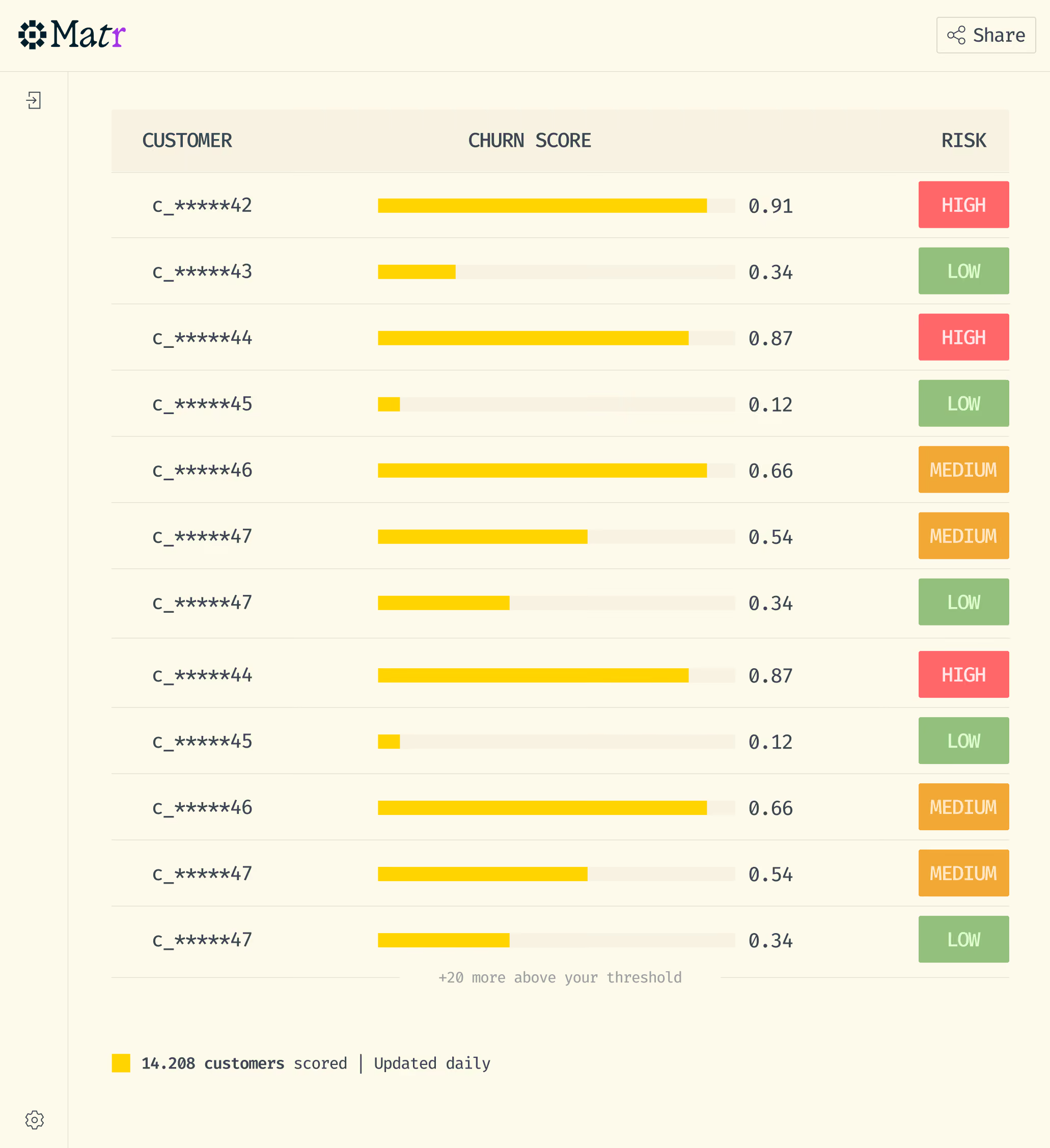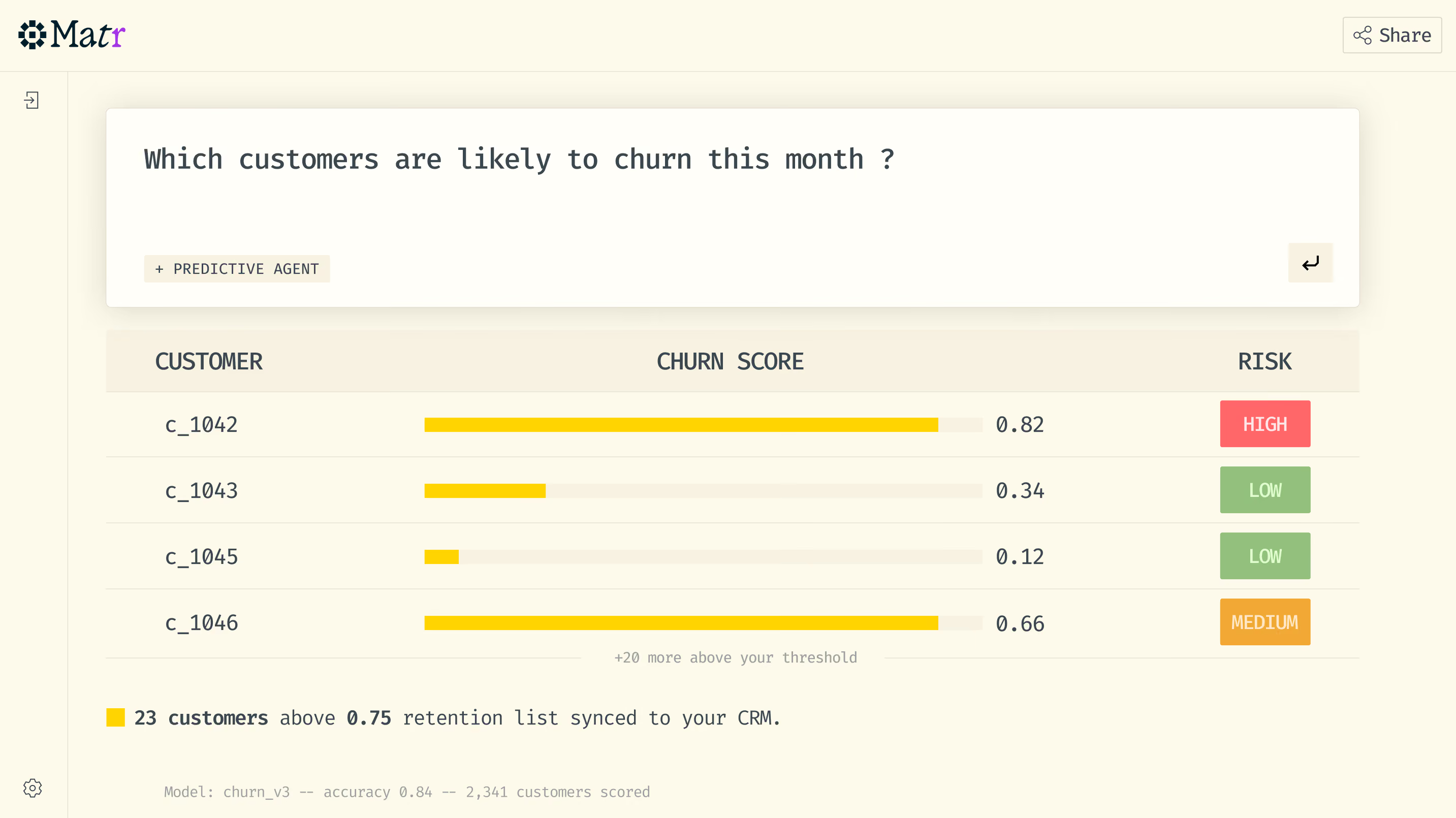
You know who churned.
Now know who's about to.

Matr gives your team the ability to anticipate churn by asking questions of their own data, getting explained answers, and triggering the right retention actions.

THE LAST MILE PROBLEM

You can see churn. You'd like to see it coming.

01

You observe

Every month, your team opens the retention dashboard. Churn is calculated, lost customers identified. You comment, analyze, plan actions for next month.

02

You wait

Three weeks later, a churn propensity dashboard arrives. Valuable, but it describes a world that has already moved: the at-risk customers aren't quite the right ones anymore.

03

You're late

The problem isn't the absence of prediction. It's the absence of prediction at the right moment, on your timeline, directly accessible to your team.

test
Ask a question. Get a model in production.

Matr turns your data analyst into a data scientist. Ask a business question in natural language, Matr handles the feature selection, model training, validation, and deployment. Your analyst stays in control.

Tell Matr what you want to predict,in plain language.
Matr identifies the right datasets and starts working.
Every step is visible and explainable. No black box.
Matr selects features, tests algorithms, and trains the model.
The model goes live, no setup.
Predictions refresh with your data, via dashboard, API, or direct integration.
Set it once. No MLOps team required.
Matr monitors performance and flags when retraining is needed.
The ML runs in production.
What a day with Matr actually looks like for a CRM team.

Detection

"Give me the 500 customers most at risk of churning in the next 30 days."

You get the list, ranked by probability, with the signals that drove each prediction (drop in usage frequency, unopened recent emails, unsubscribe page visits).

Understanding

"Why is the Premium segment churning faster this quarter?"

Matr analyzes, cross-references variables, returns the main factors. Not a spreadsheet. An explanation, structured, actionable.

Action

"Which at-risk customers are most likely to respond to a 15% retention offer?"

You get the sub-segment to activate first, with projected response rate. The campaign builds itself from there.

Measurement

"What was the impact of last month's campaign on actual churn for the targeted customers?"

The model returns the gap between predicted churn and observed churn, with interpretation. You know what worked. You iterate.

case study

Blissim cut churn by 20%

without hiring a data scientist

The Challenge

Blissim was losing €200K/month to churn. No data scientist on staff. No time to build a model from scratch.

The Solution

Matr deployed a churn prediction model on BigQuery in one day. The model scores every customer, identifies high-risk profiles, and feeds retention campaigns.

The Impact

  • +20% customer retention
  • +40K/month recovered revenue
  • Model deployed and in production
The ML runs in production.
Churn isn't a silo.

Predicting churn in isolation gives you part of the answer. Your retention decisions also depend on customer value, behavioral profile, segment dynamics. All of these questions are handled by the same models, in the same platform, through conversation.

Use

Churn × LTV

Focus retention on high-value customers, not just all at-risk customers

Churn × Segmentation

Identify the behavioral segments most exposed to churn, tailor the message

Churn × Recommendation

Suggest the right reactivation product to each at-risk customer

Churn isn't an end in itself. It's a gateway into a broader retention logic. One that Matr deploys consistently, with the same models, the same data, the same method.

The ML runs in production.
Why this isn't just
another query tool.
Who can use it

Everyone

Natural language

Speed to answer

Seconds

Data volume

Unlimited

AI Explanations

Built-in on every result

Anomaly detection

Automatic

Path to dashboard

One click

Save widget to dashboard

Path to ml

Yes

Natural language

Questions we hear most.

Every month you spend building ML in-house is a month your competitors spend shipping predictions.

  • Do I need a data scientist to use Matr?

    No. That's the whole point. Your data analyst describes the business question in natural language — Matr handles the ML pipeline.

  • What types of models can I build?

    Classification (churn, scoring, segmentation), regression (revenue forecast, demand planning), and time-series forecasting. Matr selects the best approach based on your data.

  • How accurate are the models?

    It depends on your data quality, but Matr shows you accuracy metrics, baseline comparison, and confidence scores so you can make an informed decision. Typical results: 75-95% accuracy on well-structured data.

  • Where does my data stay?

    In your warehouse. Matr connects to your Snowflake, BigQuery, or PostgreSQL. No data is moved or duplicated.

  • Can I integrate predictions into my existing tools?

    Yes. Via REST API, direct warehouse write-back, or scheduled exports. Predictions flow into your CRM, ERP, spreadsheet — wherever your team works.

  • What happens if the model's performance degrades?

    Matr monitors model drift continuously. When performance drops below threshold, it flags the issue and can trigger automatic retraining.

For more questions, feel free to contact us