
Une scale-up healthtech française a fait de la LTV un outil de décision quotidien. D'une métrique de board à un levier de revenus.
Une scale-up healthtech française de premier plan voulait cesser de piloter avec une LTV calculée en moyenne historique, et arbitrer chaque décision d'acquisition et de rétention avec la valeur client prédite. Avec Matr, son équipe data a déployé un modèle de LTV prédictive en quelques jours, et les équipes marketing, growth et la direction revenus l'utilisent au quotidien.

Une scale-up healthtech française de premier plan sert des millions d'utilisateurs, avec un parcours du gratuit au payant. Dans une activité qui combine acquisition large et rétention longue, connaître la valeur réelle de chaque client, non pas en moyenne mais individuellement, fait toute la différence entre une croissance efficace et un budget brûlé sur les mauvaises cohortes.
L'entreprise avait les données, la maturité technique et une solide équipe analytics. Ce qui lui manquait, c'était un moyen de faire de la LTV non plus une métrique trimestrielle pour le board, mais un outil opérationnel utilisé chaque jour.

La direction de la scale-up arbitrait des milliers de décisions par semaine (canaux d'acquisition, dépenses de rétention, priorisation des segments, investissements sur le cycle de vie) avec un seul chiffre de LTV, calculé en moyenne historique. Sur le papier, le calcul était propre. En réalité, certains utilisateurs valaient dix fois la moyenne et d'autres un dixième, et l'entreprise payait le même prix pour les acquérir tous.
Construire un vrai système de LTV prédictive impliquait soit de monter une équipe de data science solide en ML produit, soit de lancer un long projet externe. Dans les deux cas, le retour sur investissement reculait de plusieurs trimestres. Et dans une scale-up qui livre chaque semaine, un trimestre, c'est long.

Matr a permis à la scale-up de mettre un modèle de LTV prédictive en production sans agrandir l'équipe ni lancer un programme data parallèle. L'équipe analytics a gardé la main, la complexité de modélisation est passée chez Matr, et les équipes métier ont pu exploiter les résultats là où les décisions se prennent réellement.
Ce qui a convaincu l'équipe, c'est la combinaison : un modèle entraîné sur les données de son entrepôt, des résultats utilisables en langage naturel par des fonctions non techniques, et une couche d'explicabilité pour que le CRO puisse se fier au chiffre pour piloter le revenu, et pas seulement le regarder.
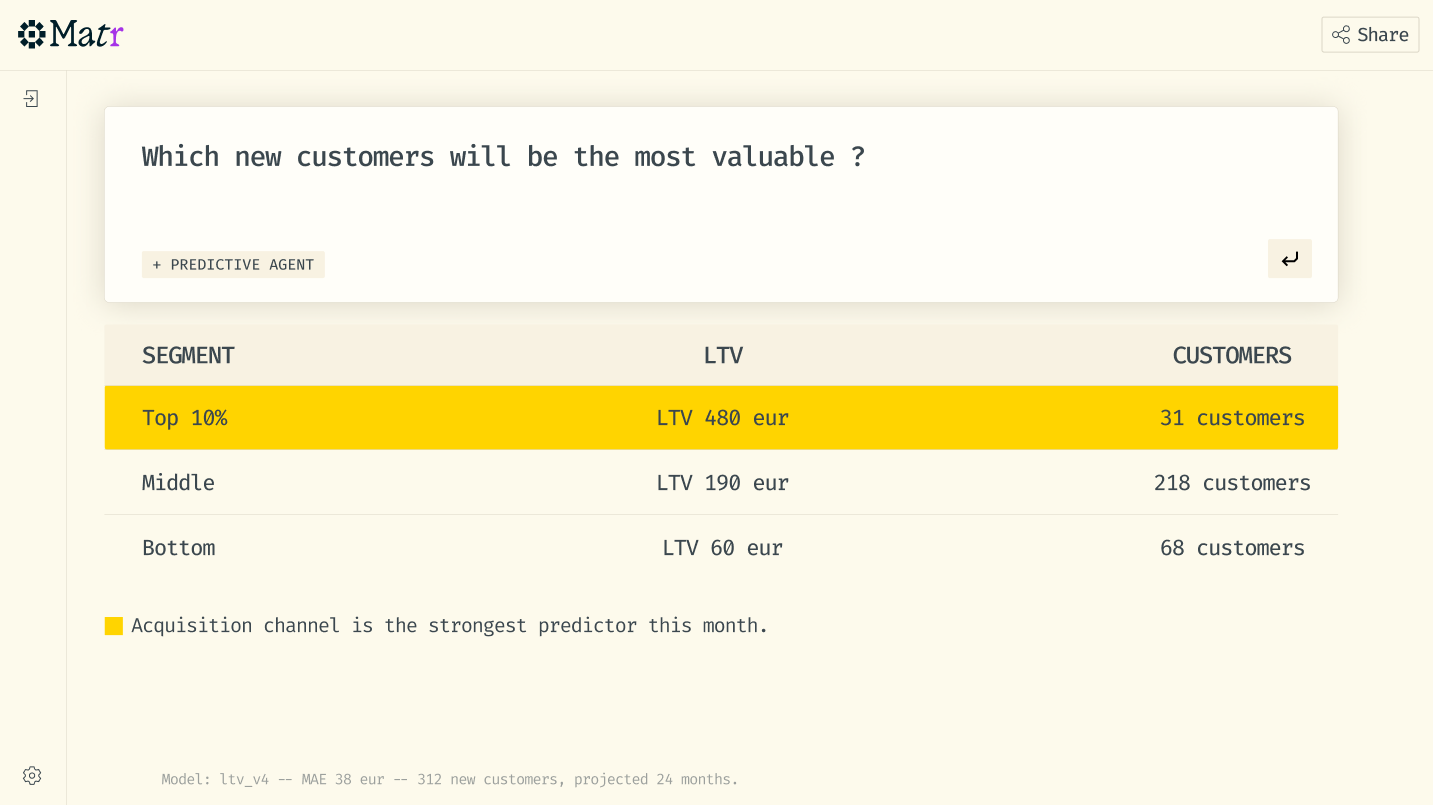
L'équipe data de la scale-up a connecté Matr à son entrepôt de données et construit le premier modèle de LTV prédictive en quelques jours, sans effort dédié de data engineering. Chaque utilisateur reçoit une valeur prédite individuelle, rafraîchie en continu au fil de l'évolution de son comportement sur la plateforme.
Depuis, l'équipe data pilote Matr comme elle piloterait une équipe de data science qui ne dort jamais : définir l'objectif de LTV, valider l'approche de modélisation, surveiller la dérive, réentraîner quand les comportements évoluent. Le modèle reste précis dans la durée, sans infrastructure parallèle à maintenir.
.png)
C'est ce qui a rendu la LTV prédictive utile, et pas seulement juste. Les équipes marketing, growth et revenus n'ouvrent pas Matr et n'inspectent pas le fonctionnement du modèle. Elles exploitent les résultats là où elles travaillent déjà.
Le marketing utilise la LTV prédite pour enchérir plus fort sur les audiences similaires à forte valeur et freiner les dépenses sur les cohortes que le modèle identifie comme peu rentables. La growth priorise ses investissements de rétention selon le potentiel prédit par utilisateur, et non selon une hypothèse uniforme. Le CRO utilise la LTV comme indicateur de pilotage par canal, par segment et par trimestre, avec le raisonnement du modèle disponible dès qu'une décision doit être défendue.
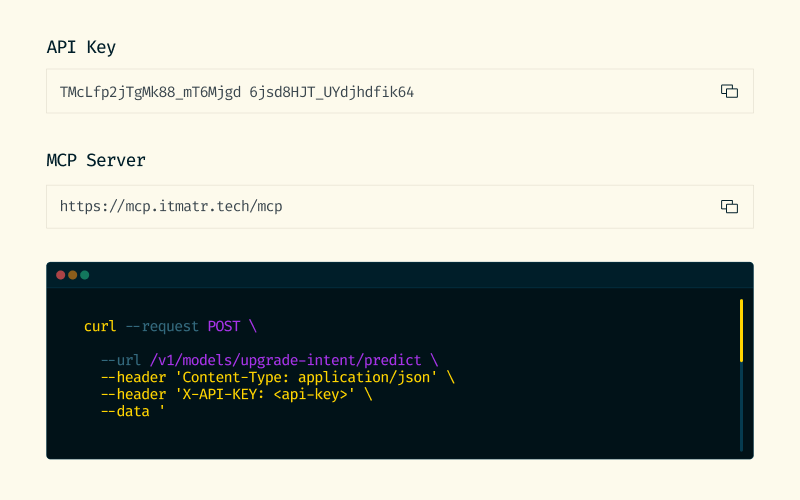
Le résultat n'est pas un calcul de LTV ponctuel. C'est une capacité opérationnelle : une équipe data qui fait tourner la LTV prédictive en production, et des fonctions côté revenus qui prennent leurs décisions quotidiennes dessus.
- +15 % de ROI d'acquisition en réallouant les dépenses vers les segments à forte LTV
- 3 jours pour construire et déployer le premier modèle en production
- 5 millions de prédictions de LTV rafraîchies chaque mois sur l'ensemble des utilisateurs
- Utilisé chaque jour par le marketing, la growth et la direction revenus, la LTV devenant un indicateur de pilotage et non plus un reporting trimestriel
Aujourd'hui, la scale-up fait tourner la LTV prédictive aux côtés d'autres modèles Matr, sur la même plateforme, avec les mêmes données et la même couche d'explicabilité.
.png)