
Anyone can produce a model. Almost no one can guarantee it's right.
The demo
With generative AI, building a model takes minutes.
The result proudly shows 87% accuracy. Everyone is happy.
The reality
Accuracy on a screen doesn't mean reliability in production. A model can look excellent and rest on data leakage. Predict the past beautifully, collapse in the present.
The difference
Catching these traps isn't a tool question. It's a method question. The one a senior data scientist applies without thinking. The one Matr applies on every project.
From understanding the business need to monitoring the deployed model, every phase follows the conventions of a rigorous data science team. And every phase is validated by your teams before moving to the next.

The cycle doesn't end at deployment. Continuous monitoring ensures the model remains performant over time. See the Model Lifecycle page for the full detail.
The same standard.
Context extraction
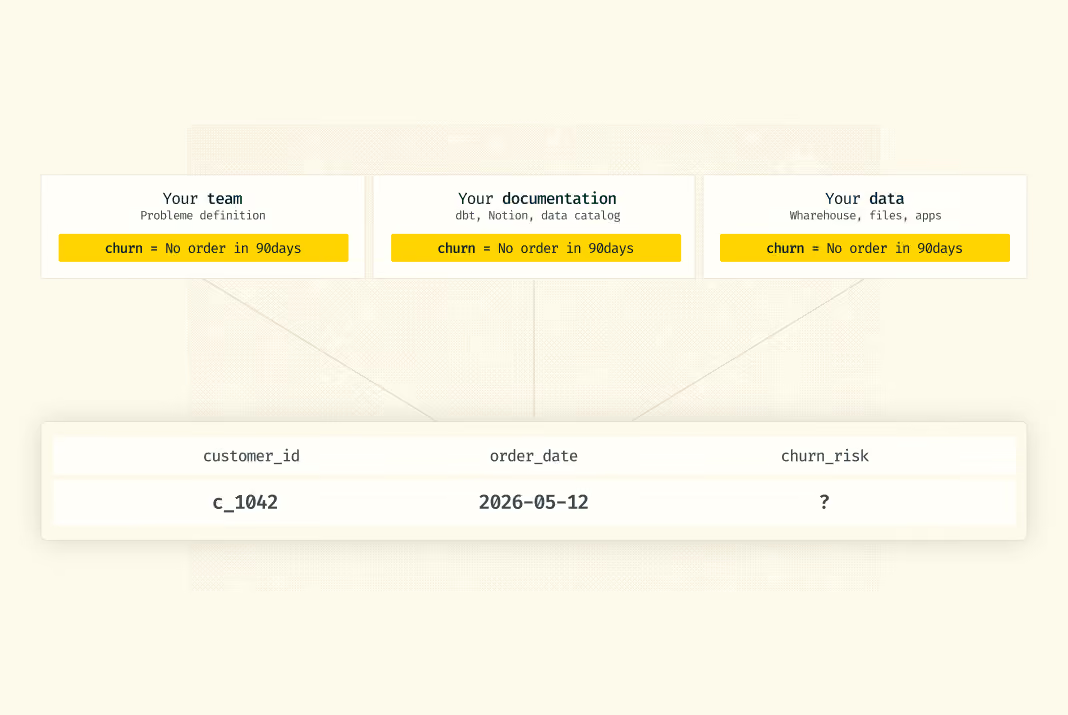
Before modeling, Matr extracts the context from three sources: your team's definition of the problem, your documentation (data catalog, dbt, Notion), and your data itself.
The triangulation automated tools skip.
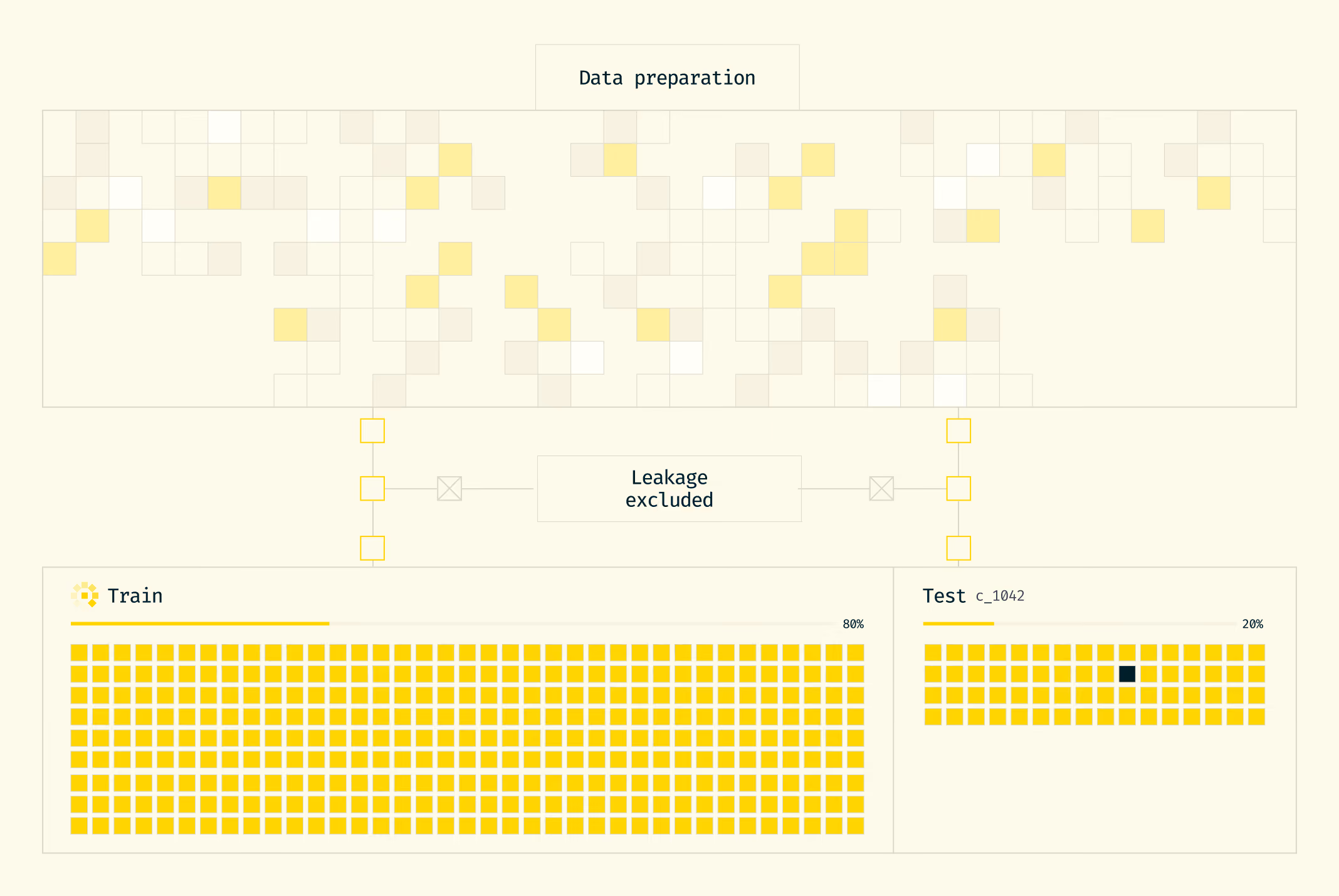
Data preparation
100% of a data scientist's work, handled by Matr. Leakage detection, rigorous train/test separation, class imbalance handling, feature engineering. Every transformation is traceable.
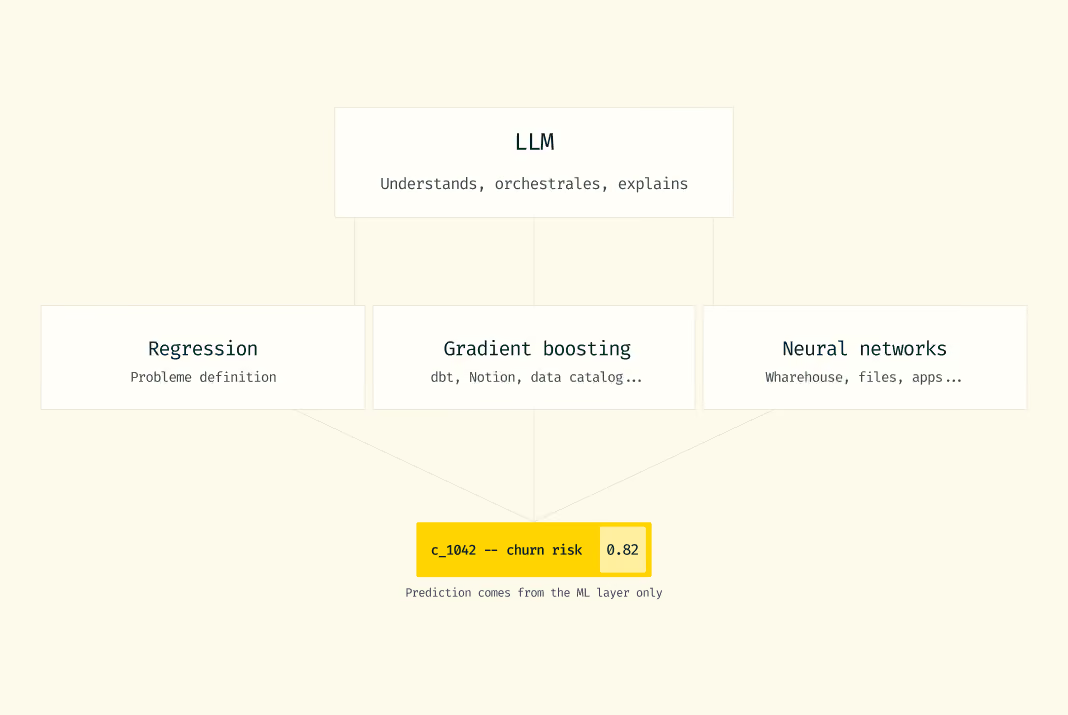
The modeling stack
Your predictions rest on proven ML models: regression, gradient boosting, specialized neural networks. The LLM understands, orchestrates, explains. It never predicts.
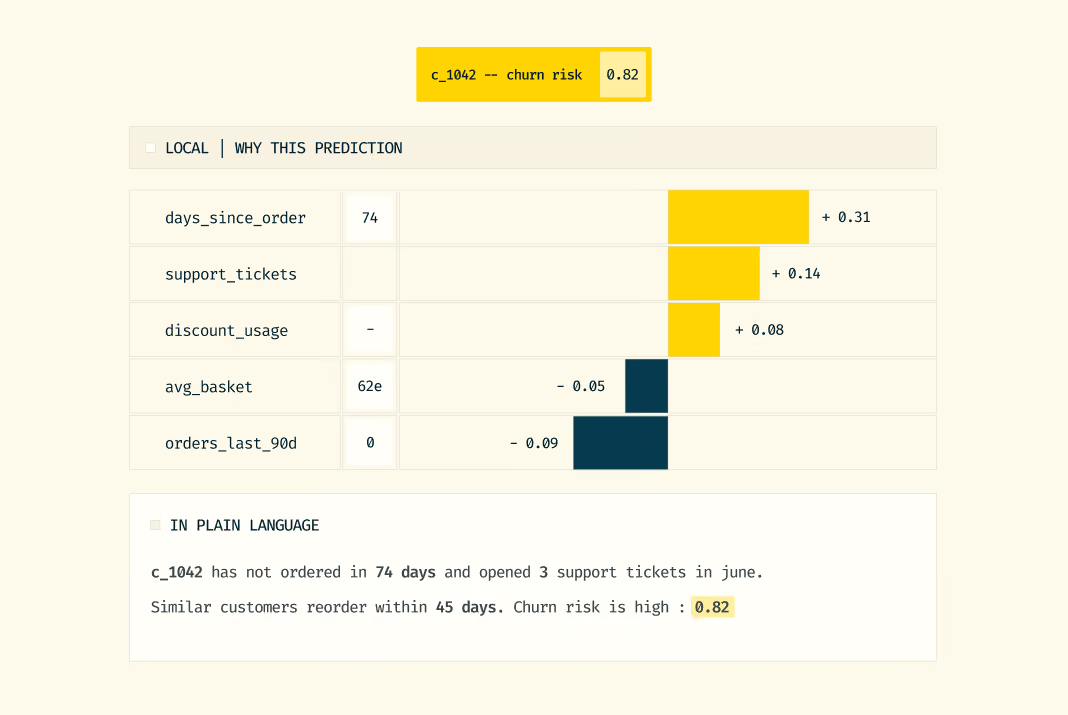
Explainability
Two levels, with standard mathematical methods. Global: which variables matter most, with what weight. Local: why this prediction, for this customer. Returned in plain language. Your teams understand, challenge, trust.
Bias detection
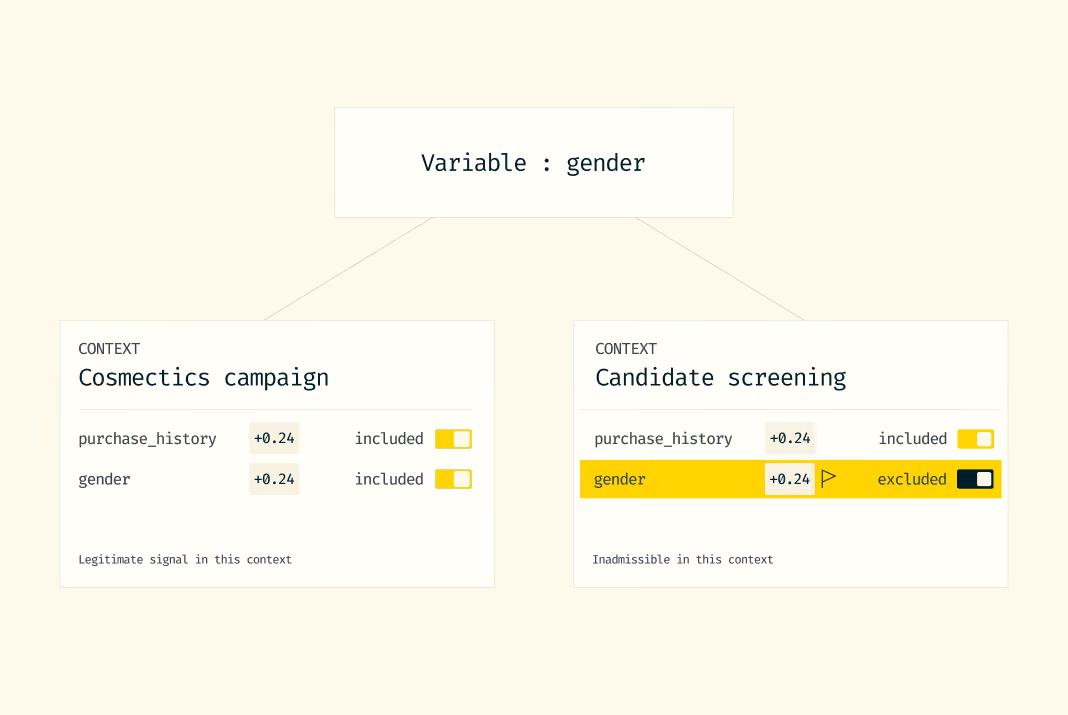
Matr detects biases before deployment: imbalances, overrepresented categories, performance gaps between segments. The same variable can be a legitimate signal in one context and an unacceptable bias in another.
Gender can be meaningful for a cosmetics campaign and inadmissible in candidate screening. Matr surfaces. Your teams decide.
Questions we hear most.
Every month you spend building ML in-house is a month your competitors spend shipping predictions.
Do I need a data scientist to use Matr?
No. That's the whole point. Your data analyst describes the business question in natural language — Matr handles the ML pipeline.
What types of models can I build?
Classification (churn, scoring, segmentation), regression (revenue forecast, demand planning), and time-series forecasting. Matr selects the best approach based on your data.
How accurate are the models?
It depends on your data quality, but Matr shows you accuracy metrics, baseline comparison, and confidence scores so you can make an informed decision. Typical results: 75-95% accuracy on well-structured data.
Where does my data stay?
In your warehouse. Matr connects to your Snowflake, BigQuery, or PostgreSQL. No data is moved or duplicated.
Can I integrate predictions into my existing tools?
Yes. Via REST API, direct warehouse write-back, or scheduled exports. Predictions flow into your CRM, ERP, spreadsheet — wherever your team works.
What happens if the model's performance degrades?
Matr monitors model drift continuously. When performance drops below threshold, it flags the issue and can trigger automatic retraining.
For more questions, feel free to contact us