
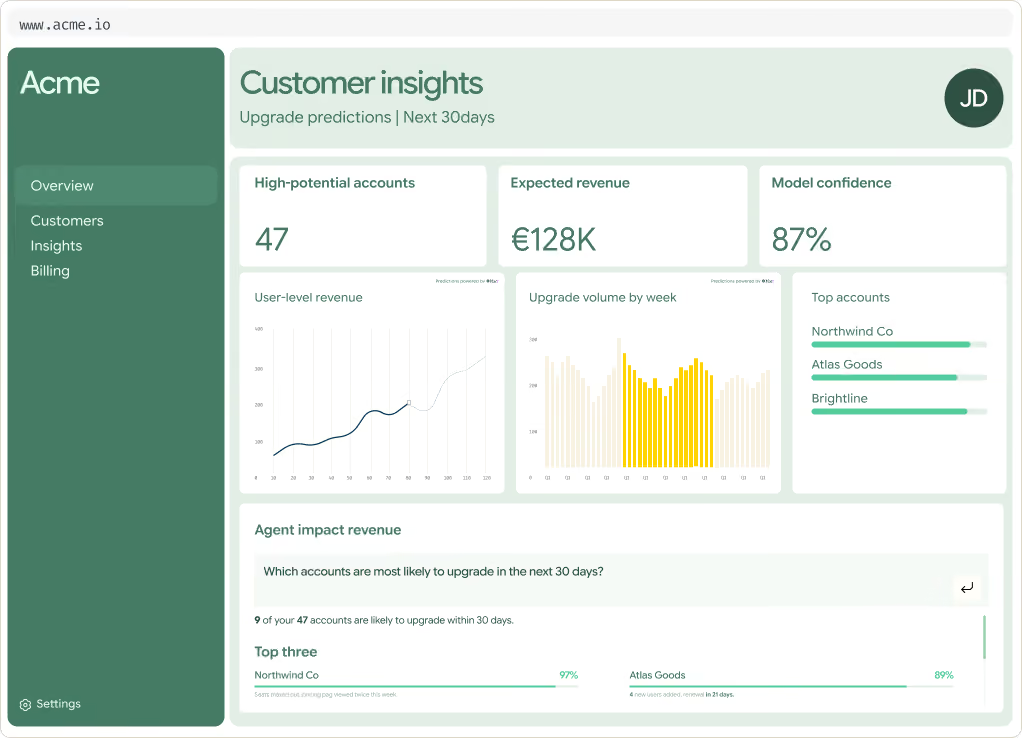
that wears your brand.
Matr Embedded gives you dashboards, natural-language queries, and predictive ML as a layer that plugs into your app and looks like a native part of it. No iframes, no compromise on UX.
Your users explore their data, ask questions in plain language, and see predictions, all inside your product, in your design. The analytics capability is Matr. The experience is yours.
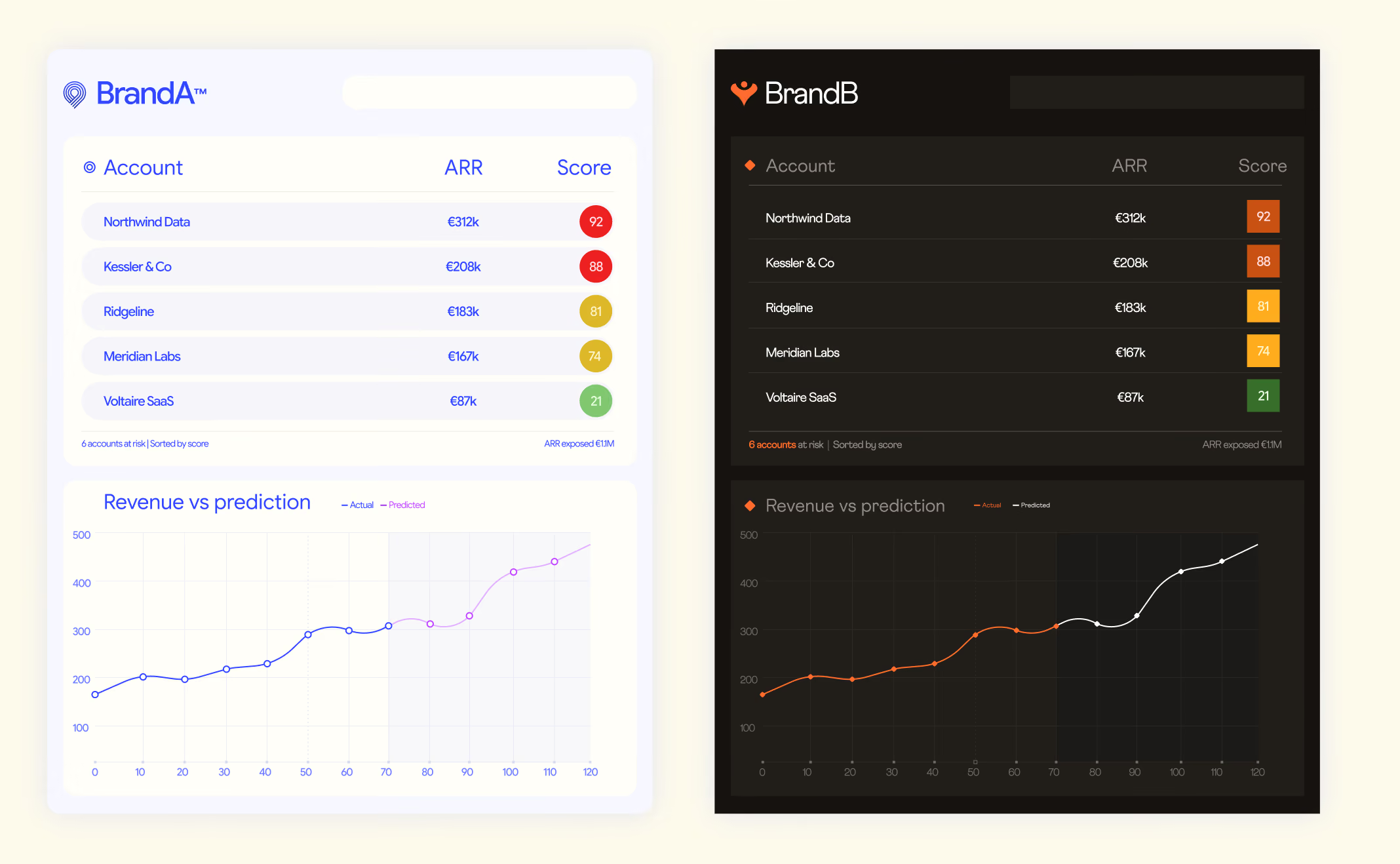
What gets embedded is everything covered in Dashboarding and Predictive. This page is about putting it inside your product. Cross-link: Dashboarding → / Predictive → How it works.
Through the MCP server, Matr becomes available inside the tools your teams already live in. No new login, no context switch.
What it looks like
Predictions are written to your tables, available to your full stack
Klaviyo, Braze, Iterable, Salesforce. Predictions feed campaigns directly
Multi-tenant by design. Each customer sees only their own data, through row-level security.
Your roadmap, unblocked
Matr maintains the engine and ships new features automatically. Your engineers stay on core product.
Live analytics.
Connect
Point Matr at your data layer. Matr reads the schema and builds the semantic context.
Configure
Choose which dashboards, models, and features to expose. Apply your brand. Set tenant-level permissions so each customer sees only their data.
Ship
Embed via SDK or API. Your users see analytics as a native part of your product. Dashboards refresh automatically, predictions update with every data sync.
Typical integration: under one week, no dedicated data engineering required.
What stays with you.
Transparency on the division of responsibilities is itself a sign of seriousness. Here, without gray areas, who does what.
Matr
Your teams
Validation
Runs performance, robustness, bias detection
Validate business acceptance criteria
Deployment
Pushes predictions to warehouse and tools
Define destinations and triggers
Adoption
Provides explainability and conversational access
Use predictions in their decisions
Monitoring
Watches drift and new categories continuously
Receive alerts and arbitrate edge cases
Retraining
Prepares and runs (auto or semi-auto)
Validate in semi-automatic mode
Governance
Tracks and historizes everything
Retain oversight and final decision
SaaS platforms
Embed usage analytics, adoption metrics, and churn alerts in their customer portal, turning data into a retention lever.

SaaS platforms
Give sellers performance dashboards and demand forecasting, buyers trend analysis. Both sides get smarter, the platform gets stickier.

Fintech and insurtech
Deliver risk scoring, monitoring dashboards, and reporting to end users without building a BI team.

HR and recruiting platforms
Surface funnel analytics and time-to-fill predictions inside their product, making data a reason customers stay.

Questions we hear most.
Every month you spend building ML in-house is a month your competitors spend shipping predictions.
Do I need a data scientist to use Matr?
No. That's the whole point. Your data analyst describes the business question in natural language — Matr handles the ML pipeline.
What types of models can I build?
Classification (churn, scoring, segmentation), regression (revenue forecast, demand planning), and time-series forecasting. Matr selects the best approach based on your data.
How accurate are the models?
It depends on your data quality, but Matr shows you accuracy metrics, baseline comparison, and confidence scores so you can make an informed decision. Typical results: 75-95% accuracy on well-structured data.
Where does my data stay?
In your warehouse. Matr connects to your Snowflake, BigQuery, or PostgreSQL. No data is moved or duplicated.
Can I integrate predictions into my existing tools?
Yes. Via REST API, direct warehouse write-back, or scheduled exports. Predictions flow into your CRM, ERP, spreadsheet — wherever your team works.
What happens if the model's performance degrades?
Matr monitors model drift continuously. When performance drops below threshold, it flags the issue and can trigger automatic retraining.
For more questions, feel free to contact us