
Blissim deployed predictive ML in production. Without hiring a single data scientist.
Blissim, a leading French beauty subscription brand, wanted to move from reacting to churn to anticipating it. With Matr, a single data analyst put predictive models into production, and the CRM teams turned them into campaigns.
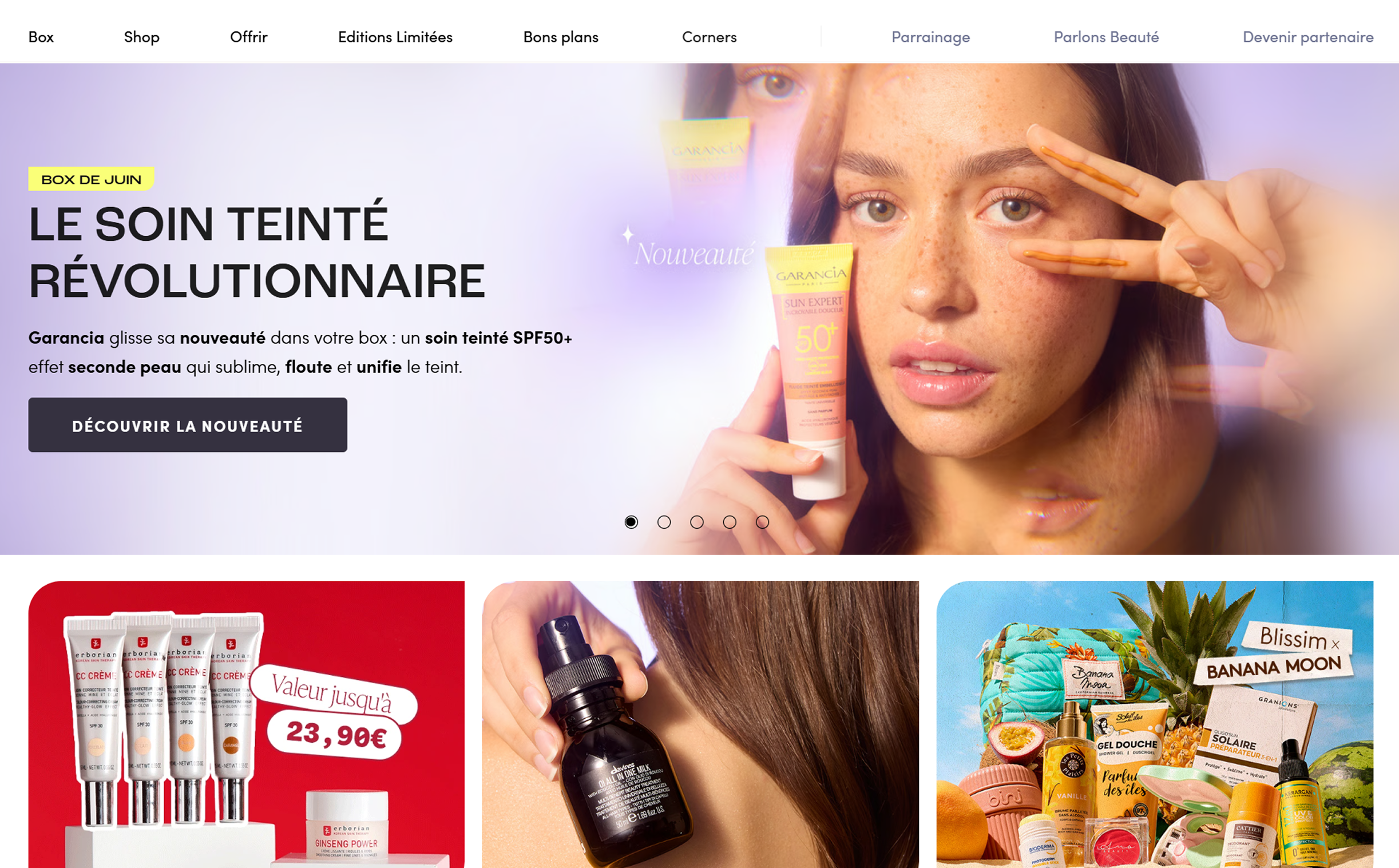
Blissim is one of France's leading beauty subscription services. In a subscription model, every month is a renewal decision, and keeping subscribers is not a side metric, it is the core of the business.
Like many companies its size, Blissim had the data and a capable data analyst, but no data science team to turn business questions into production-grade predictive models.

Blissim's CRM teams knew churn was happening. What they couldn't do was see it coming. Anticipating at-risk subscribers meant predictive modeling, and that meant one of two slow paths: hire a data science team, or run a multi-month project with an outside provider.
Both take time the business doesn't have. Every month spent building is a month spent reacting instead of anticipating.
Matr gave Blissim a way to get predictive models into production without assembling the usual machinery. No data science recruitment, no new infrastructure to maintain, no project plan stretching across quarters.
One data analyst could own the work end to end, and the CRM teams could put the output to use without ever touching a model. The expertise stayed with Blissim. The heavy lifting moved to Matr.
A Blissim data analyst connected the company's data directly from their GCP environment and built the first churn model on Matr, in days, with no dedicated data engineering effort.
From there, the analyst works with Matr the way they'd work with a data science team that never sleeps: describing what to predict, training and deploying models, keeping them monitored and retrained as subscriber behavior shifts.
This is what made the predictions useful rather than just accurate. The CRM teams don't need to open Matr or understand the modeling.
Prediction becomes targeting. The model says who and why; the CRM teams decide how to respond.
What they use is the explainability. For every at-risk subscriber, Matr surfaces why the model flagged them, the signals and behaviors behind the prediction.
That reason is what the CRM teams build on: a subscriber flagged for price sensitivity, lapsed engagement, or timing gets a campaign that addresses that specific reason.
The result isn't a one-off model.It's a working setup: one analyst running predictive models, and CRM teams turning them into campaigns.
- Predictive churn in production, with no data science hire
- A single data analyst owning the models end to end
- CRM teams building campaigns on model explainability, not guesswork
- Predictive churn in production, with no data science hire
Today, Blissim runs several predictive use cases on Matr, churn, LTV, segmentation, all on the same platform.