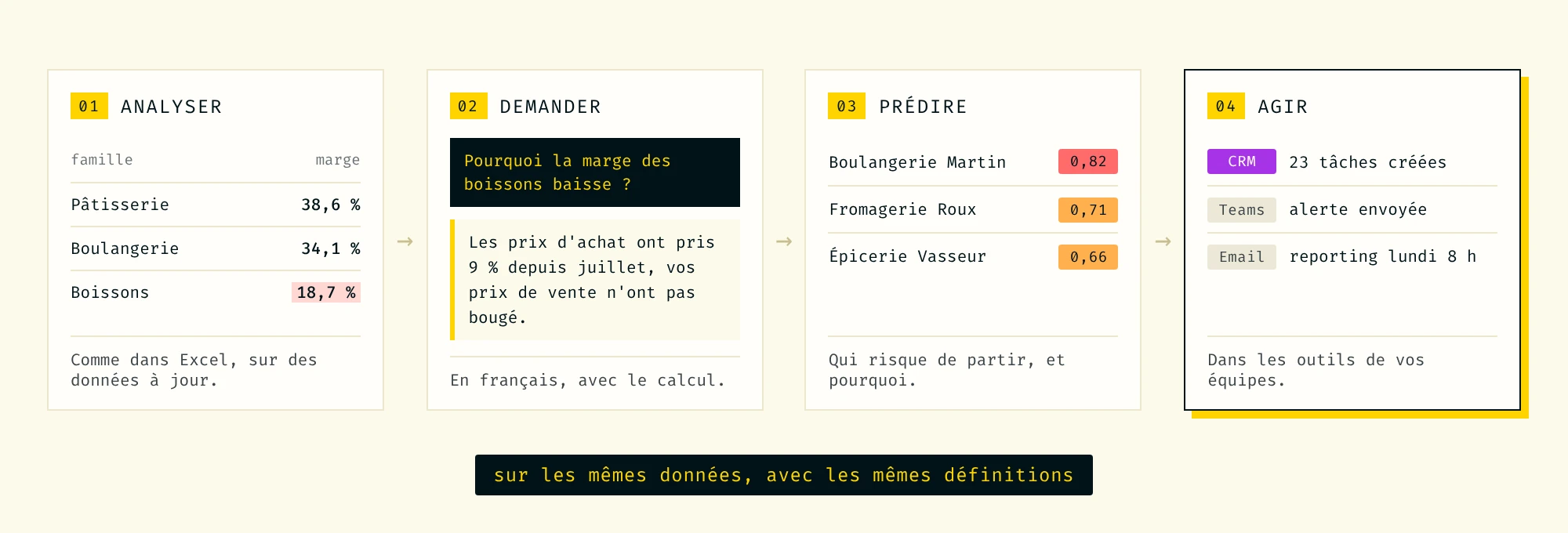






The data exists. it just doesn't reach the decision.
It's all there
The warehouse is full. Dashboards live, models running. Most of it stays where nobody looks.
The gap
Teams export to spreadsheets, paste numbers into slides. Predictions sit in a table nobody opens.
The fix
The cost was never producing the data. It's the distance to the decision. Data consumption closes it.
Most data apps break the moment they leave the warehouse. Metrics get redefined, logic gets copied, and two apps end up disagreeing on what churn means.
Apps built on Matr share one semantic layer. Same definitions, same logic, whether the app lives in your CRM, your Slack, or a customer-facing page.
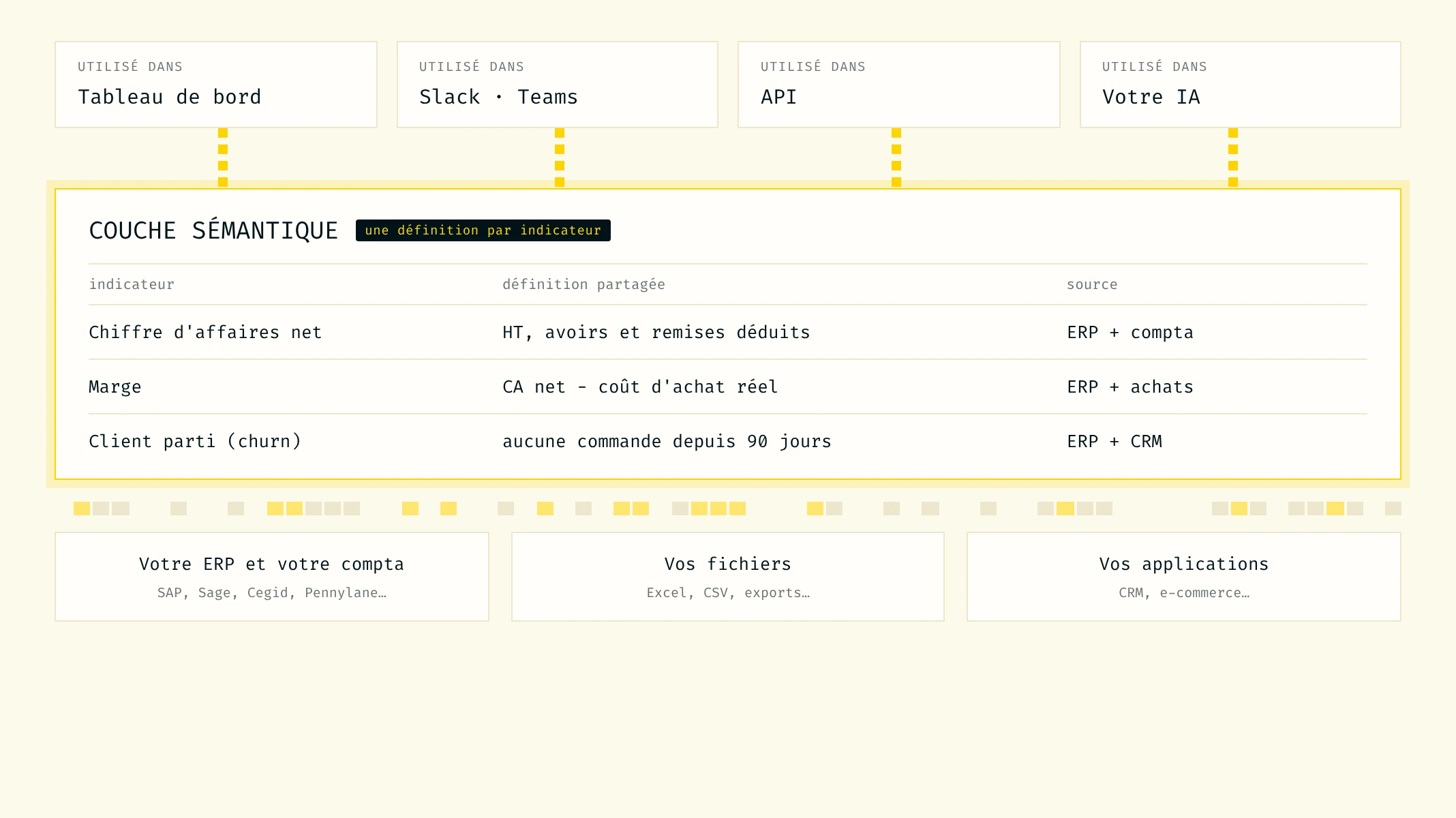
Matr fixes that at the platform level. rev_net_m3 is "Net Revenue (3-month)" whether the question comes from a dashboard, a Slack message, an API call, or an embedded widget in someone else's app.
Opening data to more places doesn't mean losing control over it.
Once your model is in production, Matr gives you four ways to consume predictions:
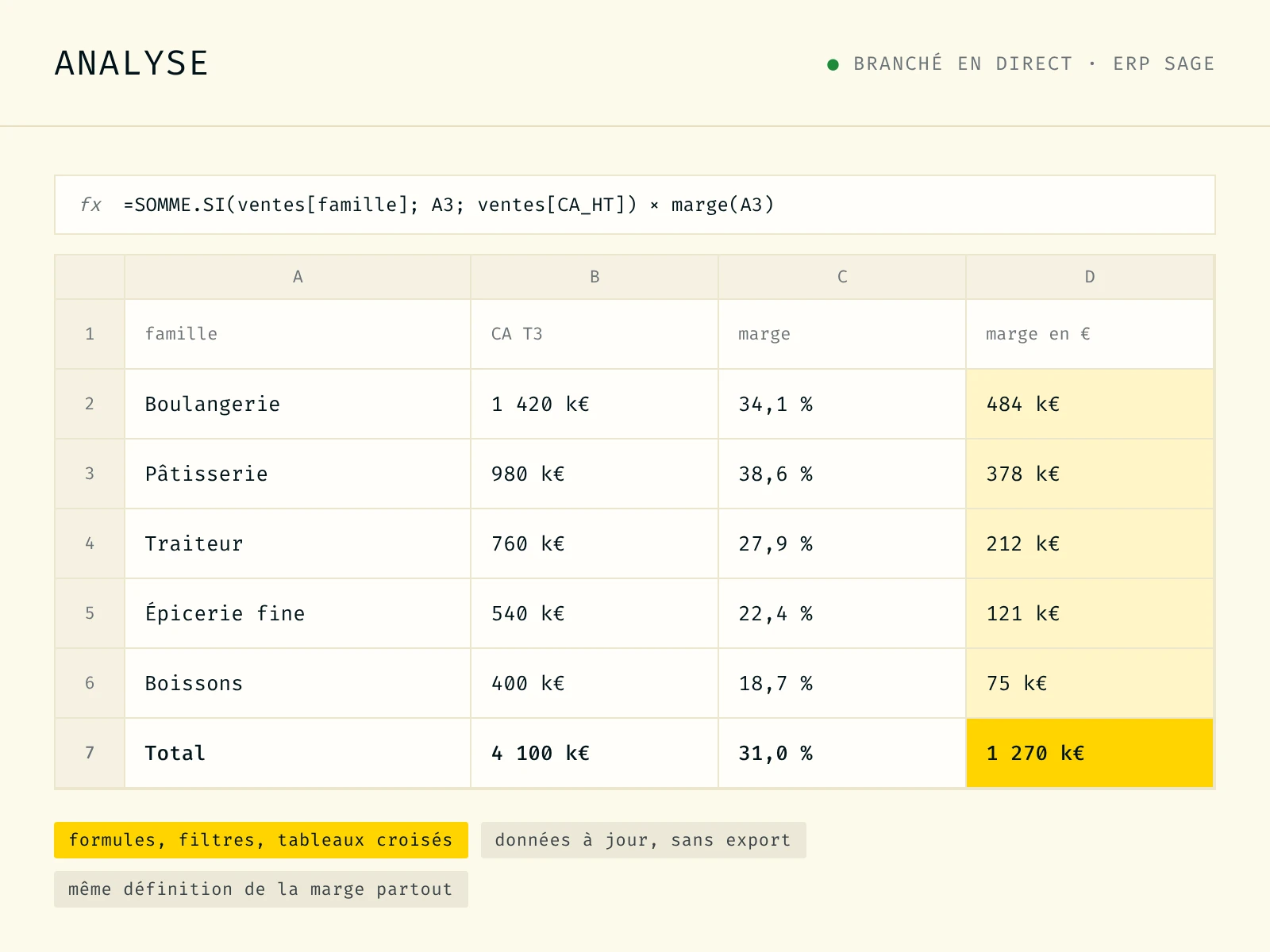
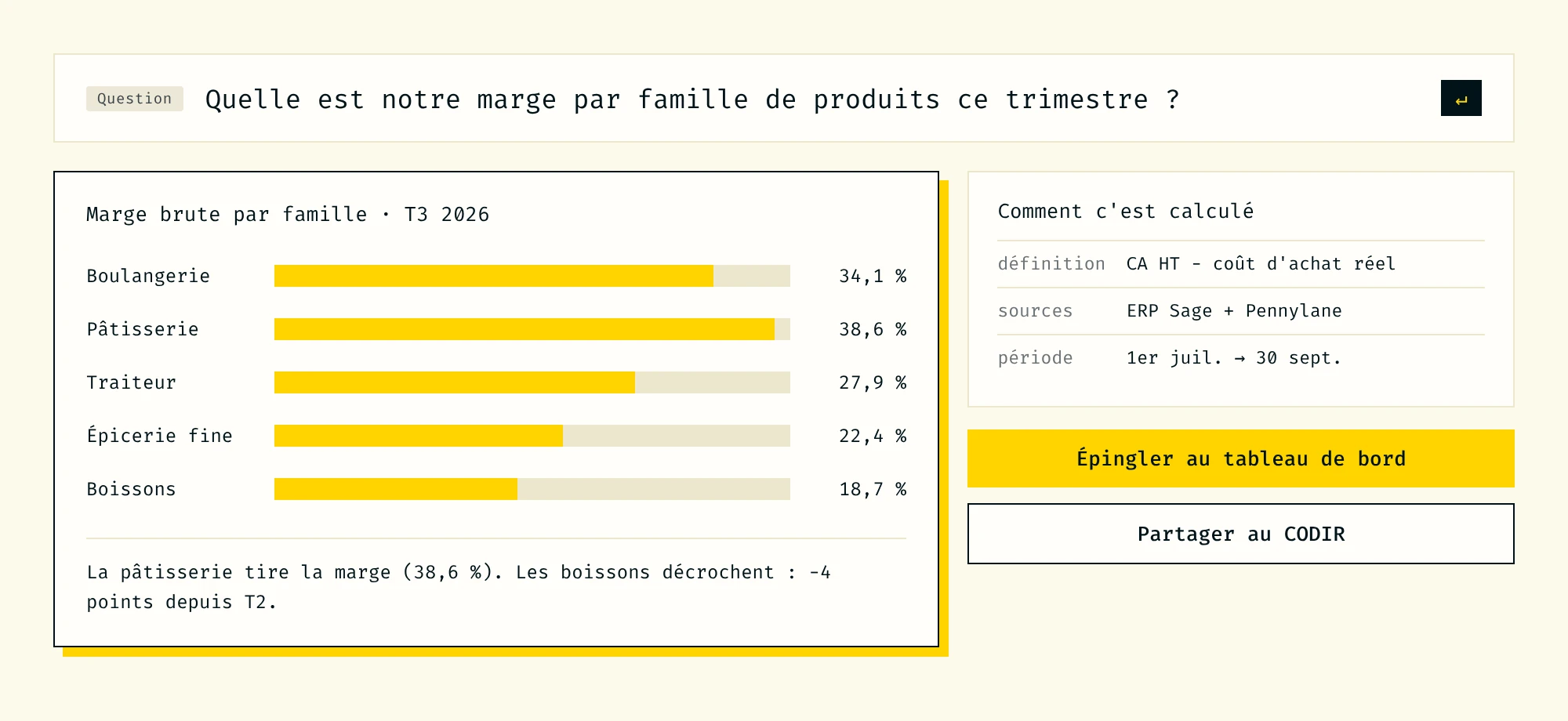
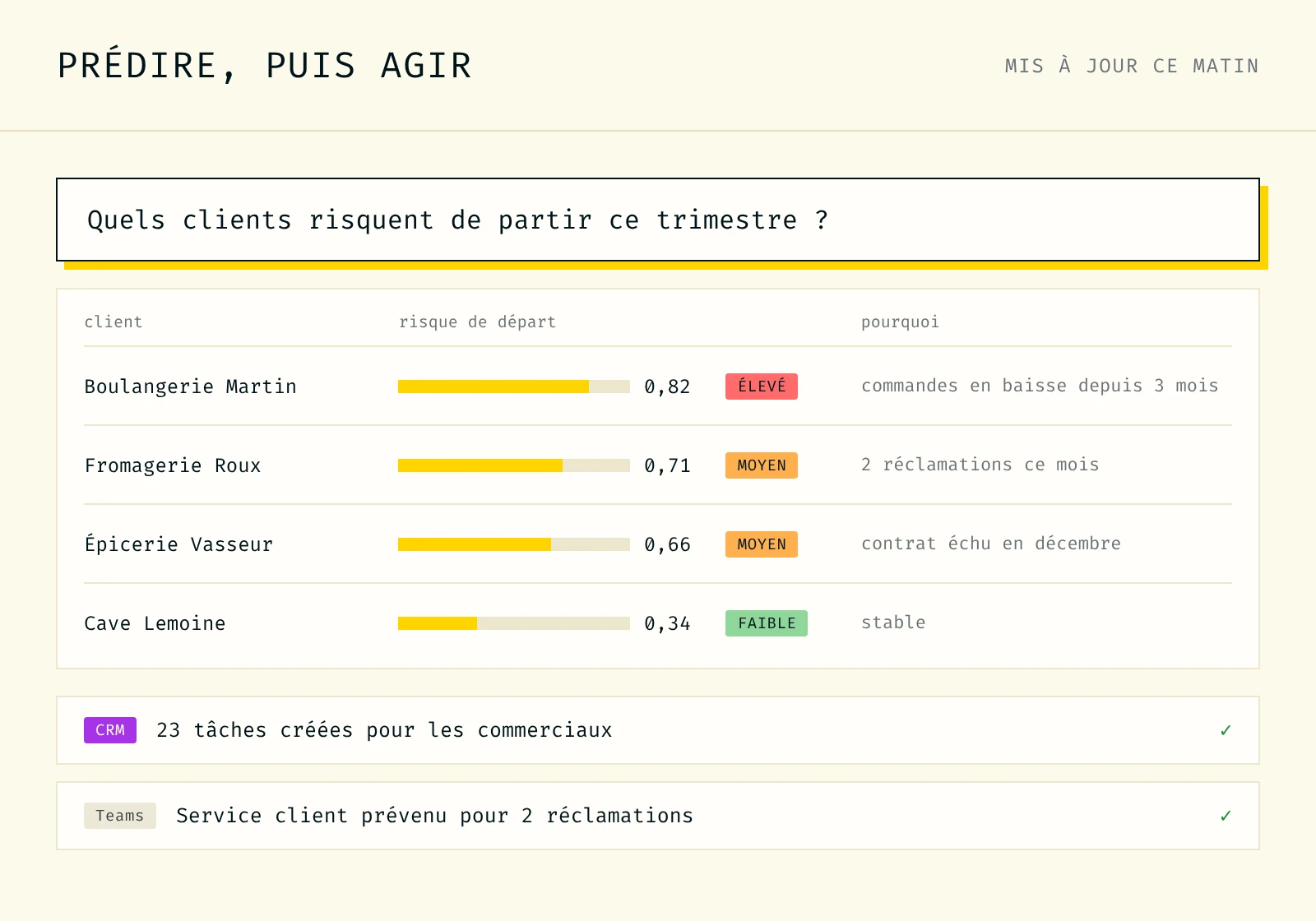
The dashboard doesn't care if the number is past or predicted.
Whatever mode you consume in, descriptive and predictive analytics travel together. The revenue curve from your warehouse and the churn score from your ML model are queryable the same way, in the same dashboard, through the same API.
Your teams stop switching between a tool for the past and a tool for the future.
A different approach.
Hours, not days
Voir et demander + Agir : le reporting du lundi arrive tout seul, avec les causes.
Business teams, not data team
Voir et demander + Agir : alerte sur la marge, cause identifiée, réponse dans Teams.
Core, full NL to SQL
Full NL to SQL
Live warehouse connection
Anticiper + Agir : score de churn poussé dans le CRM, tâche créée.
Questions we hear most.
Every month you spend building ML in-house is a month your competitors spend shipping predictions.
Do I need a data scientist to use Matr?
No. That's the whole point. Your data analyst describes the business question in natural language — Matr handles the ML pipeline.
What types of models can I build?
Classification (churn, scoring, segmentation), regression (revenue forecast, demand planning), and time-series forecasting. Matr selects the best approach based on your data.
How accurate are the models?
It depends on your data quality, but Matr shows you accuracy metrics, baseline comparison, and confidence scores so you can make an informed decision. Typical results: 75-95% accuracy on well-structured data.
Where does my data stay?
In your warehouse. Matr connects to your Snowflake, BigQuery, or PostgreSQL. No data is moved or duplicated.
Can I integrate predictions into my existing tools?
Yes. Via REST API, direct warehouse write-back, or scheduled exports. Predictions flow into your CRM, ERP, spreadsheet — wherever your team works.
What happens if the model's performance degrades?
Matr monitors model drift continuously. When performance drops below threshold, it flags the issue and can trigger automatic retraining.
For more questions, feel free to contact us
Compliance & Governance